RIP: Yvonne McCool
Feb. 3rd, 2026 11:18 pm![[personal profile]](https://www.dreamwidth.org/img/silk/identity/user.png) ladyjax
ladyjaxI received word today that an old friend from my Sentinel days, Yvonne McCool, passed away last month.
I knew she'd been very ill but it still hits hard to know she's gone.
I knew she'd been very ill but it still hits hard to know she's gone.
Fig (2011 - 2026)
Feb. 3rd, 2026 11:45 pmjames_davis_nicoll
I just got email from Fig's owner that Fig (who I owned from 2012 to 2017) passed away this evening. Cause unknown. My impression is Fig just didn't wake up.
Reading Tuesday
Feb. 3rd, 2026 10:12 pmtroisoiseauxRead Risk by Dick Francis, a 1977 thriller about an accountant/amateur jockey who wins a major race by sheer accident and is promptly kidnapped; once he escapes, he spends the rest of the book trying to figure out who had him kidnapped - and why - while juggling his regular line of work, riding as a jockey, technically a love triangle?? I guess??, getting kidnapped AGAIN, and having a lot of feelings about tax law. I love characters who are very good at one specific thing/passionate about something seemingly boring/etc. and so I was delighted by the main character, who is the BEST and MOST ETHICAL accountant. He has a tragic backstory for why he's an accountant. An odd, quick, fun read.
In War and Peace, one thing I noticed in the lead-up to the first big battle scene was the way the narrative shifts from exclusively third-person POV to describing the Russian army's position in the first-person possessive: "our right flank", "our infantry", etc. The narrative of the battle itself is less focused on troop movements than individual characters and incidents; orders get waylaid because the adjutant can't be bothered to ride to where there's actual fighting to deliver it, or ignored because the captains of a joint Russian and German unit(?) are too busy grappling for authority between themselves. Nikolai Rostov is surprised to discover that fighting a war actually involves the people on either side trying to kill each other: "Who are they? Why are they running? Can they be coming at me? And why? To kill me? Me whom everyone is so fond of?" (...which, unfortunately for the intended poignancy of the moment, I did 100% read in Miette Voice: you kick Nikolai? You kick Nikolai like the football???)
In War and Peace, one thing I noticed in the lead-up to the first big battle scene was the way the narrative shifts from exclusively third-person POV to describing the Russian army's position in the first-person possessive: "our right flank", "our infantry", etc. The narrative of the battle itself is less focused on troop movements than individual characters and incidents; orders get waylaid because the adjutant can't be bothered to ride to where there's actual fighting to deliver it, or ignored because the captains of a joint Russian and German unit(?) are too busy grappling for authority between themselves. Nikolai Rostov is surprised to discover that fighting a war actually involves the people on either side trying to kill each other: "Who are they? Why are they running? Can they be coming at me? And why? To kill me? Me whom everyone is so fond of?" (...which, unfortunately for the intended poignancy of the moment, I did 100% read in Miette Voice: you kick Nikolai? You kick Nikolai like the football???)
Dull roots stirred, even if it's hardly spring rain out there
Feb. 3rd, 2026 08:03 pmoursinSo yesterday I had further converse with another person apropos giving a talk as part of a series of events in connection with an exhibition of archives at a local record office some months hence and they sound keen, and it is something I can do, and have a fair amount of material including visual stuff already. Plus, besides expenses, there will also be a modest honorarium - they actually asked what do I usually get paid - errrr.
So there's that.
And the long review essay is finally in production and while I had some rather confusing emails about this yesterday I think this is down to Academic Journals Having Really Confusing Systems, it is indeed going ahead, and I was obliged to compose a short biographical note, both to reflect current institutional state and also be pertinent to topics addressed in review (my last bio note leaned rather heavily on my relationship with Sid).
And I am beginning to get to grips with article for review, though slightly fearing I may be Interrogating From the Wrong Perspective (journal is Not My Disciplinary Field, though article certainly overlaps it).
Have had the very cheering news that a conference I thought I would never get to again because it would involve transatlantic travel, is coming to London next year, yay yay yay, I am already pondering a paper.
In other personal news, have booked dental checkup and hygienist appointment for next week.
And in other news, the National Trust has reached its target to buy the land around the Cerne Giant:
The money will be used to improve access to the 55-metre (180ft) figure and to link up a patchwork of habitats, improving conditions for species such as the rare Duke of Burgundy butterfly.
It will also enable further archaeological work to help solve the enduring mystery of whom the giant depicts, and when and why it was created.
Seen on the Watsfic Discord
Feb. 3rd, 2026 02:40 pmjames_davis_nicoll
QWP
Hey everyone,
**This year marks WATSFIC's 50th Anniversary!** To commemorate this we are releasing a new issue of our club fanzine Starsongs.
If you would like to become an officially published author, we are opening up submissions right now! Send us your **short stories, opinion pieces, open letters** [to systems, games, concepts, authors, or WATSFIC itself], **reviews of Sci-Fi/Fantasy** games, books, or other media, **your best drawings or paintings**, or whatever else you'd like to share with WATSFIC and the greater UW Community. We will endeavour to accept and print as many submissions as possible as long as they are club appropriate. If you're unsure if your idea is right for Starsongs, please don't hesitate to contact an exec and we'd be more than happy to discuss it and/or workshop it with you!
If you are looking for inspiration, you can find the 1970s releases of Starsongs on the University of Waterloo's Digital Library.
**We will be accepting submissions until the end of March, if you would like to contribute** please fill out this form here.
-# Submissions after March 31st may still be accepted, but we cannot promise anything, so please try to get any and all submission in before this deadline to ensure your work can be considered.
D&D scenario
Feb. 3rd, 2026 11:54 amjames_davis_nicollDecades after the PCs' last adventure, an old epic foe reappears, still bent on conquest.
Time to get the band back together!
Alas, the band isn't just dispersed. All but one member is long dead.
Happily, the last surviving member is a necromancer.
Time to get the band back together!
Alas, the band isn't just dispersed. All but one member is long dead.
Happily, the last surviving member is a necromancer.
Angel With a Sword (Merovingen Nights, volume 1) by C J Cherryh
Feb. 3rd, 2026 08:49 amjames_davis_nicoll
A moment of foolish charity drags impoverished Altair Jones into a deadly struggle.
Angel With a Sword (Merovingen Nights, volume 1) by C J Cherryh
Books read, late January
Feb. 2nd, 2026 04:48 pmmrissaStephanie Burgis, Enchanting the Fae Queen. I always love Steph's writing, and this was a fun book when I needed a fun book. This one felt weighted on the romance side of the romance/fantasy balance early in the book, but the fantasy plot did come roaring back in the last third. I wonder how much that reaction is objective and how much it's that it's an "enemies to lovers" plot, which is a trope that's always a hard sell for me. Looking forward to the third one.
Sophie Burnham, Bloodtide. Book two in its series, please do not start here as a lot of the emotional weight starts with book one in this series, but if you were having fun with this science fiction against empire, here's more, and there's natural disaster and community uprising and good stuff.
Lewis Carroll, Alice's Adventures in Wonderland. Reread. Okay but! This is not the Tenniel illustrations, which my godmother gave me when I was small. This is the Tove Jansson illustrations, which I had never seen before, and they're delightful and very Jansson.
Steph Cherrywell, Unboxing Libby. This is a delightful older MG book about a bunch of young humaniform robots on Mars on a voyage of self-discovery opposed to the corporate bullshit that brought them there. I hope Cherrywell does more unique fun books like this.
John Chu, The Subtle Art of Folding Space. Discussed elsewhere.
Samuel K. Cohn Jr., trans., Popular Protest in Late Medieval Europe. A sourcebook of a lot of translated primary sources about uprisings, rebellions, and protests in mostly Italy and France in this era. (When he says "north of the Alps," he means "the region of France that is north of where you would draw the latitude line for the Alps," alas, but still interesting for itself.) Useful if you're super-interested in popular uprisings, which guess who is.
Colin Cotterill, The Coroner's Lunch, Thirty-Three Teeth, Disco for the Departed, and Anarchy and Old Dogs. Rereads. Sometimes you look up and it's been twenty years since a series you like started, and you haven't reread the beginning of it since then. I say "series you like," but what happened here is that I liked the beginning a lot and have sort of grown less interested in the later volumes, so I was worried that it was a case of "my standards went up and his stayed the same." It was not! The first volumes are still quite good, nothing else quite like them. They're historical magical realist murder mysteries set in 1970s Laos, and the setting is a large part of the focus of the books. I firmly believe, as of this reread, that they are marketed as mysteries primarily because that's the subgenre that knew how to market comparatively short series novels with an atypical setting, because the mystery structure is not at all traditional. Some elements are not handled as we'd handle them now, but so far I am feeling that the characters whose identities might be handled differently now are being treated with respect by the narrative if not by the people around them. I can't think of another series that has as good a character with Downs as Mr. Geung. I love him so much. He gets to have his own strengths, interests, sense of humor, agency. Sometimes the people around him call him the r-word or underestimate him, and they are always proven wrong. Similarly, in the fourth book we meet Auntie Bpoo, a trans woman who is joyfully, passionately herself and who does not attempt to pass as cis. I love Auntie Bpoo. The language used to introduce her is not what we would use now, and the protagonist--who was born in the early 1900s and is 73 years old in the book--initially underestimates her, but he very quickly learns that this is very, very wrong--and yet just as Mr. Geung never becomes a cloying angel, Auntie Bpoo is allowed to keep some of her rough edges--she's a person, not a sanitized trans icon. However--even with those caveats, not everyone will want to read ableist slurs, misgendering, etc., so judge accordingly whether that's something you want to go through. I'm going to keep on with this series until I hit the point where I'm no longer enjoying it; we'll see where that is.
Dominique Dickey, Redundancies and Potentials. Kindle. Extremely, extremely full of killing. Oh so much killing. Who knew that time travel was in place for the killing? There ends up being emotional weight to it in ways that I find interesting given that I've been watching the James Bond movies that are the exact opposite (zero time travel, zero emotional weight, still tons of killing). Interesting stuff.
Kieron Gillen, Caspar Wijngaard, Clayton Cowles, and Rian Hughes, The Power Fantasy Vol. 1: The Superpowers. This felt to me like they were afraid they wouldn't get to do as much series as they had plot, and so everything sort of got jammed in on top of each other. The extremely personal take on Mutually Assured Destruction was interesting--but also this is a comic about MAD, so if you're not up for very visceral potential of destroying the world today, maybe save it for later.
Lisa Goldstein, Ivory Apples. Reread. Goldstein definitely knows how to write a sentence, so this was a smooth read that ultimately did not hang together on the reread for me. There are too many places where someone's motivations, especially the villain's, are based on "somehow they got the feeling that xyz" which then turn out to be correct for no particular reason, and I think what the muses are doing as metaphors for creative work simply don't end up working for me when pressed into service for an entire book's worth of material. A lot of the individual chapters are vivid, but the ending just isn't enough for me, alas.
Theodora Goss, Letters from an Imaginary Country. Lots of familiar favorites in this collection as well as some new things, demonstrating once again the breadth of what the field is publishing and of what even a fairly focused author (Goss loves ethereal fairytale-type fantasy) can manage to do.
Rachel Hewitt, Map of Nation: A Biography of the Ordnance Survey. This is about the first surveys of Britain and how the departments involved with them developed, what early technology and staff were used, etc. It's this year's gift to myself for my grandfather's birthday (he worked for a time as a surveyor as a young man) and was, I feel, entirely a success on that front, especially because I like maps and mapping and how people's thinking about them has evolved very much myself.
Jessica Lopez Lyman, Placekeepers: Latina/x Art, Performance, and Organizing in the Twin Cities. It's the nature of this kind of study to overgeneralize and make overemphatic statements in places, and this does probably less of that than most local/contemporary ethnography. It also gave me lots of interesting case studies of a part of my home that's less familiar to me and some things neighbors are getting up to, bracing to read in this time. This isn't all of what we're fighting for, but it's sure what we're fighting for.
Abir Mukherjee, The Burning Grounds. Latest in its mystery series of 1920s Calcutta, exciting and fun, jumps the characters down the line a few years from previous volumes but still probably better if read as part of the series than a stand-alone. Hope he does more.
Arturo Perez-Reverte, The Fencing Master. Much swash very buckle wow.
Teresa Mason Pierre, ed., As the Earth Dreams: Black Canadian Speculative Stories. Read this for book club, and there was an interesting pattern of lack of character agency in most of these stories, which is not my favorite thing. Some stories still a good time, lots of interesting discussion in book club.
Randy Ribay, The Awakening of Roku. Not as strong as the first book in its series, and I felt like it needed another editing pass (sometimes on the sentence level--we've seen Ribay do better than this in the previous book). A fun adventure, but if the Avatar tie-in novelizations had started with this one I'd have shrugged and stopped here. I think in some ways maybe letting Roku off the hook even when it hopes not to be.
Madeleine Robins, Point of Honour, Petty Treason, and The Sleeping Partner. Rereads. When I read the fourth one in this series in the previous fortnight, I remembered how much I liked it, so I went back and reread the whole thing. Yep, still liked it. I think most of them are actually written to be reasonable entry points to the series, so if you're in the market for a slightly-alternate Regency period set of murder mysteries, whatever you can grab here will work pretty well.
Muriel Rukeyser, The Collected Poems of Muriel Rukeyser. This was good enough that I read the whole 600 pages, and yet I did not end up with a favorite poem, I didn't end up vibing with any particular era of her work, and there were some that made me sigh and roll my eyes and go, oh, right, that period. I don't know why not! I can't say, for example, that long, wordy, referential, somewhat-political poems of the 1930s are not my jam--I'm a fan of W.H. Auden. But for whatever reason, the rhythms of Rukeyser's language never caught me up. Well. Now I know.
Melissa Sevigny, Mythical River: Chasing the Mirage of New Water in the American Southwest. Goes back to the Spanish for discussion of what water there is and what water people hoped there would be and what terrible decisions they made around those two things. And a few non-terrible decisions! But. Oof. Interesting stuff, always there for the water, not at all how water works where I am so I can see why the Spanish made some mistakes, and yet, oof.
D.E. Stevenson, Kate Hardy. Kindle. I was expecting this to twist more than it did, because Stevenson sometimes does, and it's better when she does, and also because my Kindle copy had a lot of additional material in the back, biographical sketch and list of other books and so on, so it looked like there was room for more to happen, and then boom, nope, fairly standard happy ending. It was reasonably fun to read but not one of her deeper or more interesting works.
T.H. White, Mistress Masham's Repose. I had picked up several references to this from the ether, but I don't think I actually had a chance to read it when I was small. I'm wondering what it was about the mid-20th century that got us the Borrowers and the Littles and this. Anyway it was cleverly done and reasonably warm and very much of its era, and I'm glad I read it for myself instead of just picking up hints here and there.
A sentence I did not expect to encounter
Feb. 2nd, 2026 05:42 pmjames_davis_nicoll"In 1947 and 1948, Agee wrote an untitled screenplay for Charlie Chaplin, in which the Tramp survives a nuclear holocaust; posthumously titled The Tramp's New World, the text was published in 2005."
I FORGOT TO MENTION
Feb. 2nd, 2026 09:43 pmrydra_wongArtorias is a DLC boss.
Beating the final boss of Dark Souls puts you straight into New Game Plus, so you need to do the DLC first, but yeah. I have in fact completed the base game up until you enter the last area. And there is a general consensus that the final boss is not the hardest in the game.
The DLC bosses are all substantially harder than the base game ones, and I have two more left, so it remains to be seen whether I can beat them, but at this point the odds look decent that I will at least be able to finish the base game.
I would like to remind you all that my initial goal was to see if I could beat the tutorial.
Beating the final boss of Dark Souls puts you straight into New Game Plus, so you need to do the DLC first, but yeah. I have in fact completed the base game up until you enter the last area. And there is a general consensus that the final boss is not the hardest in the game.
The DLC bosses are all substantially harder than the base game ones, and I have two more left, so it remains to be seen whether I can beat them, but at this point the odds look decent that I will at least be able to finish the base game.
I would like to remind you all that my initial goal was to see if I could beat the tutorial.
Bundle of Holding: Forbidden Psalm
Feb. 2nd, 2026 02:13 pmjames_davis_nicoll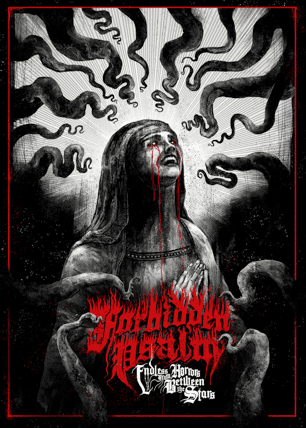
Eight death-metal miniatures games from OptimisticNL inspired by, and compatible with, the artpunk tabletop roleplaying game Mörk Borg.
Bundle of Holding: Forbidden Psalm
![[syndicated profile]](https://www.dreamwidth.org/img/silk/identity/feed.png)
Things
Feb. 2nd, 2026 03:29 pmoursinLike they would have painted a sinister sixth finger (come on down Mr Cromwell insisting on the warts): Hidden detail found in Anne Boleyn portrait was ‘witchcraft rebuttal’, say historians. Hmmm. Oh yeah? Am cynical.
***
Overlooked women artists (maybe I will mosey on down to the Courtauld....): The Courtauld’s riveting, revelatory and deeply researched show of ten lost female painters looks afresh at the golden age of British landscape art:
Some of Mary Smirke’s pictures were ascribed to her brother and Elizabeth Batty’s entire output was assumed to have been her son’s.
***
Men are poor stuff. Men are terribly poor stuff. Men covertly filming women at night and profiting from footage, BBC finds.
***
The Black Beauty in the White House: this is actually about the famous horse book, which was written in a house of that name. In Norfolk.
This is the story of a child from a coastal town in Norfolk, who would go on to influence life around the world and who is just as famous today. Not Horatio Nelson, but rather Anna Sewell, the author of Black Beauty. She managed to not only influence the lives of people but also horses (and possibly many other animals as well) with the story, published only a few months before her death.
***
This looks fascinating though I need to read it a lot more closely: Right place, right time: Luck, geography, and politics:
On 12th May 2020, Mass Observation collected c5,000 diaries from people across the UK. Many of these diaries mention luck and many of these luck stories are geography stories. Geographers, though, have not written much about luck. In this article, I review the literature on luck from within and beyond geography to construct a working definition and geographical approach to luck. The working definition describes luck as chance, fortuitous, unexpected events that were beyond the control of those for whom they are now significant. The geographical approach distinguishes four geographical aspects of luck: the geometry of luck; lucky places; right place, right time; and the practical sphere.